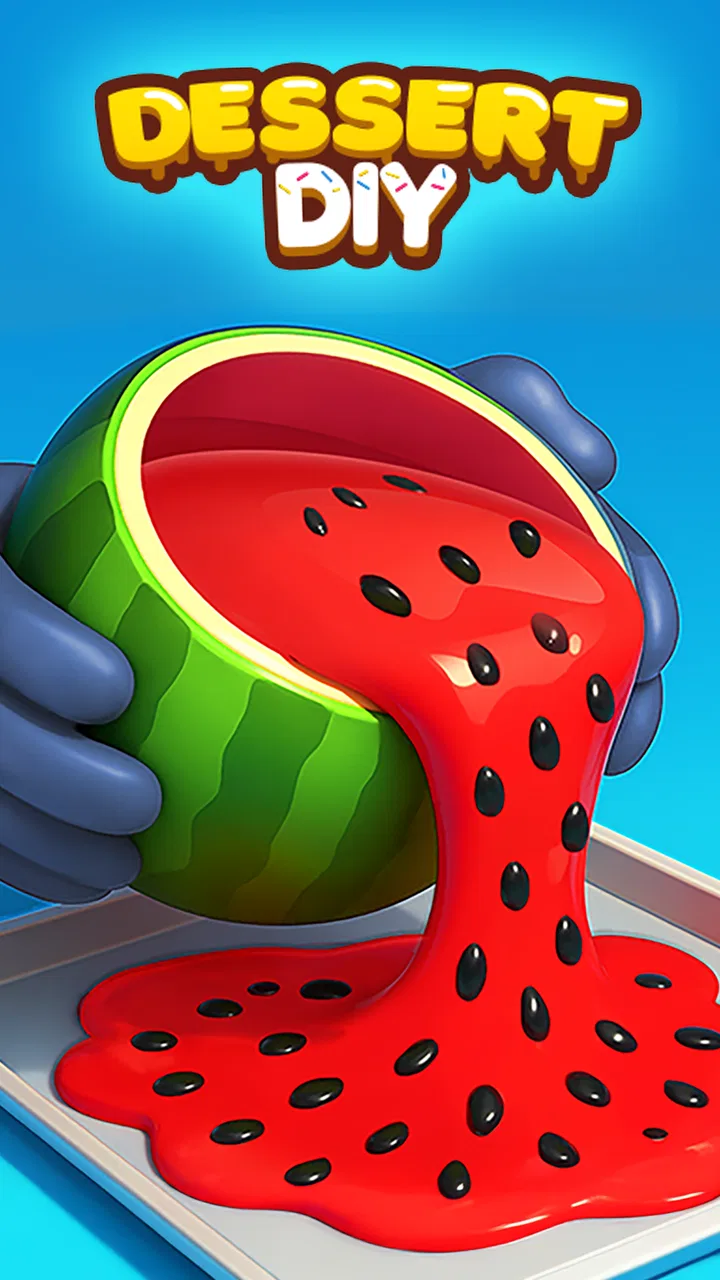
Dessert DIY
- 4.4
- Rating
- 100.00M
- Installs
- Free
- Price

 Analysis by App-foxy
I spent time with Dessert DIY expecting a quick, colorful simulation game, and that is exactly where it works best. The basic appeal is immediate: I prepare sweet treats, make choices about their appearance, and watch each dessert come together through short, hands-on activities. It feels closer to a relaxing digital craft session than to a demanding management simulator, which makes it easy to pick up when I have only a few spare minutes.
Developed by CrazyLabs LTD, this free game sits in the simulation category and is aimed at Everyone. It has become a very widely played mobile title, with over 100 million installs and an average rating of 4.4 from around 349 thousand ratings. Those figures make sense once you understand the audience: the controls are approachable, the presentation is cheerful, and the early goals are clear without requiring a tutorial-heavy introduction.
My overall impression is positive, but it depends on what you want from a dessert game. If you enjoy decorating, choosing ingredients, and seeing a finished creation quickly, it can be a pleasant little routine. If you are looking for deep recipes, detailed restaurant management, or a long-term strategic challenge, the lightweight structure may feel too simple. The game is free to start, while optional purchases range from $0.99 to $6.99 per item, so I would approach it as a casual experience rather than a complete cooking simulation.
You May Also Like

 AccuWeather: Weather Radar
AccuWeather Review: A Quick, Clear Forecast for Everyday Decisions
For everyday plans, the best forecast is the one you can understand quickly. AccuWeather makes rain timing, radar, and local conditions easy to act on, with a few trade-offs.

 Hill Climb Racing
Why Hill Climb Racing Still Turns Crashes Into One More Run
A tiny car, a bumpy hill and one more upgrade: Hill Climb Racing keeps resurfacing because its simple chaos makes every near-miss feel personal.

 AliExpress - Shopping App
AliExpress Makes Global Shopping Feel Personal, but Shoppers Bear the Risk
AliExpress turns a global marketplace into a pocket-sized discovery engine. Its reach is useful, its shopping loop compelling, and its trade-offs easy to miss.

 Lords Mobile: Kingdom Wars
Lords Mobile Is a Kingdom-Building Routine, Not a Quick Match
A case-by-case verdict on the building, battles, device demands, and social commitments that make Lords Mobile rewarding for some players and exhausting for others.

 PDF Scanner app - TapScanner
TapScanner Makes Paperwork Easier to Capture, Check, and Share
TapScanner makes scanning with a phone feel less like a rescue operation and more like a dependable step in getting work done. Its capture tools are useful, though not flawless.

 Block Blast!
 Shows How Much a Puzzle Game Can Leave Out
A quiet grid game shows why puzzle players increasingly value instant clarity, repeatable skill and low-pressure play—and where the genre still needs to catch up.
More From Our News Desk
View All News


How the early goals make the game easy to understand
The first thing I noticed is how quickly the game communicates its purpose. I am not asked to study complicated menus or learn a large set of rules before doing anything enjoyable. The focus stays on making desserts such as boba tea, cakes, ice cream, and popsicles, with each activity broken into understandable actions. That clarity matters on a phone because I can begin playing without setting aside a long session.
The early goals are satisfying because they are visible. I can see what I am trying to create, make decisions during the preparation, and reach a finished result without waiting through a long campaign. This creates a useful rhythm: choose, prepare, decorate, and move on. It is not a complicated loop, but it gives every short session a recognizable beginning and end.
For younger players, that simplicity is one of the strongest parts of the design. The Everyone content rating matches the friendly tone and uncomplicated premise. For adults, the same quality works as a quick distraction. I can play while waiting for an appointment or during a short break, complete a dessert-focused activity, and stop without feeling that I have abandoned a large strategic plan.
A realistic everyday use case is a parent handing over a phone for a few minutes while waiting at a café. The child can concentrate on the visual task of preparing a treat instead of navigating a dense interface. I would still recommend that adults supervise purchases, especially because the game is free to install and includes optional items. The accessible presentation does not automatically mean every part of the experience will suit every child’s habits.
The dessert theme also gives the opening a stronger identity than a generic decoration game. Boba tea, cakes, ice cream, and popsicles each suggest different textures and shapes, so the activity feels varied even when the underlying interaction remains simple. I enjoyed the contrast between assembling something layered, handling a cold treat, and adding finishing touches to a drink. That variety helps the beginning avoid feeling like one repeated recipe.
What progress feels like during ordinary play
The progress signals are mostly visual and immediate rather than numerical. A dessert looks more complete as I work on it, and the final presentation gives me a clear sense that the task has been finished. This is important because the game does not need to bury its rewards under complicated menus. The finished treat itself acts as the short-term payoff.
I found that the strongest motivation comes from seeing how a plain starting point turns into something colorful. That transformation gives the game a small creative reward even when the activity is brief. It is not the same as building a large bakery, collecting a deep recipe book, or optimizing a production line. Instead, the satisfaction comes from completing one appealing object at a time.
That approach makes the game approachable, but it also limits the feeling of long-term advancement. Players who need a strong sense of account growth, permanent upgrades, or carefully planned unlocks may find the progress signals less compelling than those in a full restaurant-management game. Dessert DIY is more interested in the moment of making than in constructing a complex business around it.
One useful way to play is to treat each dessert as a small creative exercise rather than rushing through it. I pay attention to the order of preparation and the final appearance instead of tapping as quickly as possible. This makes the short activities feel more deliberate. It also helps reveal whether I enjoy the actual making process, because there is less distraction from the basic interaction.
The game’s current version is 3.6.0.0, and it requires Android 7.0 or later. For someone deciding whether an older Android phone can run it, that minimum is a practical detail to check before installing. On a compatible device, the low-pressure format should be easy to understand, but the experience is still best judged by whether you enjoy these small visual tasks rather than by expecting a full cooking career.
Difficulty, pacing, and the point where repetition appears
The difficulty curve is gentle. I never felt that the game was trying to overwhelm me with demanding timing or complicated recipe logic. That is a strength when the goal is relaxation, and it helps children or casual players participate without frustration. The downside is that experienced simulation fans may reach the limits of the challenge fairly quickly.
The pacing is built around short bursts. A dessert begins, develops through a sequence of actions, and reaches a conclusion before the session becomes a major commitment. I like that design for mobile use because it respects interruptions. If I need to put the phone down, I am less likely to lose the entire point of a long session.
There is a trade-off, though. A gentle curve can make the first few activities feel more engaging than later ones if the player is waiting for a meaningful increase in complexity. The game’s appeal depends on enjoying the subject matter and presentation. If the novelty of preparing sweet treats fades, there may not be enough strategic pressure to keep a player who prefers constant escalation.
This is where it differs from the usual alternatives in the simulation category. A traditional cooking-management game often asks me to balance time, customers, ingredients, equipment, and money. A more elaborate decorating game may offer extensive customization with a long-term collection to build. Dessert DIY stays narrower: it puts the dessert-making gesture in front of me and keeps the surrounding management light. I prefer it when I want a calm, focused activity, but I would choose a deeper cooking simulator for planning and resource decisions.
The lack of heavy difficulty is not automatically a weakness. For a player who wants a soothing game after work, a demanding curve could spoil the purpose. I can enjoy a few rounds without memorizing systems or worrying about failure. However, players who measure enjoyment through mastery should understand that the challenge is likely to come from completing and presenting treats, not from solving difficult economic or culinary problems.
A practical tip is to use the game in short planned sessions instead of expecting it to occupy an entire evening. Ten minutes of focused dessert preparation can feel pleasant; a much longer session may expose the repetition more clearly. I also think it works better with a relaxed mindset. Trying to turn every action into a speed test creates pressure that the game itself does not really need.
Unlocks, retention pressure, and the free-to-play balance
The game’s retention comes mainly from the desire to make another dessert and see the next visual result. That is a softer form of motivation than a system built around intense competition or complex progression. I can return because the theme remains pleasant and the activities are easy to start, not because I am required to maintain a complicated schedule.
That low pressure is welcome, but it can also make returning feel optional rather than urgent. Players who enjoy daily goals, ranked competition, or a strong chain of demanding unlocks may want more structure. Here, the attraction is the immediate activity. Once I have had enough of preparing sweet treats, there is less external pressure pushing me to continue.
The free entry point is helpful for trying the game without a financial commitment. I can decide whether the tactile dessert routine suits me before spending anything. Optional purchases are available, with individual items priced between $0.99 and $6.99. I would keep that in mind when allowing a child to play, because an accessible game can still make optional spending easy to encounter.
My advice is to play the free portion first and only consider a purchase if it solves a specific annoyance or adds something I genuinely value. I would not spend simply because the game creates a momentary urge to continue. Casual simulation games are easiest to enjoy when the player controls the pace rather than feeling pushed into buying a shortcut or extra item.
Another non-obvious trade-off is that the game’s friendly simplicity can make its retention feel less intrusive than in more competitive mobile titles, yet it also means there is less reason to return when I am not in the mood for dessert preparation. That balance will appeal to people who dislike stressful engagement loops. It may disappoint players who want a persistent world that keeps developing while they are away.
The title has around 2.4 thousand written reviews alongside its much larger rating total. I read that combination as a sign that many people form a quick opinion from the accessible presentation and short sessions, while fewer players leave detailed explanations of their experience. In practical terms, I would trust my own first session more than the popularity alone: the central question is whether the preparation actions remain enjoyable after the initial colorful impression.
Who will enjoy it, and who should choose something else
I would recommend this game to children who like food-themed creativity, families looking for a simple shared activity, and adults who want a low-stakes mobile distraction. It is also a good fit for players who prefer visual completion over complicated planning. The variety of dessert types gives the theme enough room to stay inviting, especially for someone who enjoys seeing a final creation appear quickly.
I would be more cautious about recommending it to players who want realistic cooking technique. The game presents an imaginative dessert-making experience, not a substitute for learning recipes or kitchen skills. It is also not the best choice for someone who wants a complete bakery business, because the focus is on individual treats rather than detailed staffing, finances, supply management, or customer strategy.
Players who dislike optional purchases should set expectations before installing. The game is free, but the presence of paid items means it is worth checking the purchase flow before handing the device to a child. For me, this is not a reason to reject the game, but it is part of using it responsibly.
It may also be a poor fit for anyone who needs a strong challenge from the first minute. The gentle pacing is intentional, and that makes the game comfortable rather than demanding. If you prefer games where every mistake matters or where progress depends on mastering increasingly complex systems, a more traditional cooking or management title would probably hold your attention longer.
My verdict on the progression and lasting appeal
After playing it as a casual simulation, I think Dessert DIY succeeds when it keeps its promise of quick, cheerful dessert creation. The early goals are clear, the visual progress is easy to follow, and the gentle difficulty makes it suitable for relaxed play. Its best quality is that I can understand the appeal almost immediately and enjoy a complete activity without a large time commitment.
The main limitation is equally clear: the progression is not deep enough for everyone. The game relies on the pleasure of making another treat, so players who need elaborate unlock paths, demanding challenges, or detailed management may eventually look elsewhere. That is not a flaw in the basic concept, but it does define the audience very strongly.
For my own use, I would keep it installed as a short-session game rather than a main simulation experience. I would open it when I wanted something colorful and uncomplicated, especially during a break or while waiting. I would not choose it over a deeper cooking simulator for a long weekend session, but I would choose it over a complicated alternative when I wanted immediate, low-pressure interaction.
With its Everyone rating, free starting price, broad reach, and straightforward dessert theme, it is easy to see why the game has attracted a large audience. The developer has focused on an inviting idea rather than a difficult system. If you want relaxed digital dessert making with quick goals and gentle pacing, this is a worthwhile choice; if you want serious simulation depth, look for a more demanding alternative.
My final recommendation is to try it with modest expectations. Enjoy the individual creations, use short sessions to avoid repetition, and keep optional spending under your control. In that role, it is a pleasant and accessible game that understands the value of a small, satisfying activity. It does not need to become a full bakery empire to be enjoyable, but it does need to remain the kind of simple creative break that made me want to return in the first place.
FAQs for Dessert DIY
01What is Dessert DIY and how does it work?
Dessert DIY is a creative simulation app that allows users to design and create virtual desserts. Users can choose from a variety of ingredients and tools to craft unique sweets. The app provides step-by-step guidance, making it easy for both beginners and experienced users to experiment with different dessert combinations.
02Is Dessert DIY free to download and use?
Dessert DIY is free to download on both Android and iOS platforms. While the core features are accessible for free, the app offers in-app purchases for additional ingredients, tools, and customization options. These purchases enhance the overall experience but are not necessary to enjoy the app.
03What are the main features of Dessert DIY?
Dessert DIY offers a range of features including a vast selection of ingredients, customizable tools, and interactive tutorials. Users can share their creations on social media or within the app community. The app also includes challenges and events that encourage creativity and provide rewards for completing tasks.
04Does Dessert DIY require an internet connection?
Dessert DIY can be used offline for creating and designing desserts. However, an internet connection is needed to access certain features such as sharing creations, downloading updates, and participating in online challenges or events. Offline access ensures users can enjoy the app anywhere, anytime.
05What age group is Dessert DIY suitable for?
Dessert DIY is suitable for all ages, making it a fun and educational tool for children and adults alike. The app's intuitive design and interactive tutorials cater to younger users, while the creative freedom and variety of options appeal to older audiences. Parents can rest assured knowing the app is safe for kids.
Pros
- Intuitive interface makes creation easy.
- Wide variety of dessert options to explore.
- Regular updates with new recipes.
- Great for both kids and adults.
- Offline mode available for uninterrupted play.
Cons
- Some features require in-app purchases.
- Ads can interrupt gameplay frequently.
- Limited customization for advanced users.
- Occasional bugs in new updates.
- Requires significant storage space.

Dessert DIY
Gallery